Ten Actions Congress Could Take to Lower Energy Prices
Key Takeaways
« Congress could maintain reliable and affordable electricity supplies by keeping existing plants operating—plants whose costs have already been recovered from ratepayers—and by refusing to rush a transition to weather-dependent generation sources.
« Clarifying the intent of legislation, such as Section 111 of the Clean Air Act or Section 401 of the Clean Water Act, will ensure that laws can’t be pushed beyond their intended scope and help slow the rushed closures of reliable baseload generation sources.
« Allowing companies that need large amounts of electricity to self-supply will protect electricity customers from the need to subsidize their demand.
« Reducing federal regulations and legislation that restrict the production and free flow of energy around the nation and around the world will ensure
Overview
Energy powers life, and energy that is affordable and reliable powers prosperity. But affordable and reliable energy requires a few basics to become a reality: sufficient supplies and controlled costs. Energy prices tend to stabilize—and even decline—when Washington establishes reasonable safety and environmental guidelines, then steps back to let free markets operate, and individuals and businesses innovate and produce.
Federal policymakers have a role in ensuring that the government does not unnecessarily restrict markets. To that end, we have set out a list of ten policies that would keep energy prices low if enacted. These policy recommendations center on increasing domestic production, regulatory reform, tax reductions, expanding energy infrastructure, and promoting exports.
Several of the recommendations, including the rescission of the Mercury and Air Toxics Standard (MATS) Rule and the 2009 Endangerment Finding, have already been targeted by federal agencies in new or amended rules and executive orders, but long-term statutory approaches could provide greater durability across administrations.
Additionally, rather than presenting a single narrative throughout the paper, these ten policy recommendations are presented as distinct items to simplify access. Readers can consider the full paper or review the list of actions below to focus on the action(s) they find most useful.
The ten actions that would help lower electricity, gasoline, and natural gas prices for the American public include:
- Keep reliable plants running: Codify the repeal of the 2024 Mercury and Air Toxics Standard (MATS) amendments to prevent coal units from being forced into early retirement.
- Prevent regulatory overreach on reliable generation: Clarify that Clean Air Act, Section 111 does not cover greenhouse gases.
- Provide a bridge to new generation capacity: Create a federal reliability safe harbor for at-risk coal and gas units.
- Stop cost-shifting to households: Require data centers and hyperscalers to cover their costs.
- Add reliable capacity fast: Fast-track firm generation, especially at brownfield sites.
- Speed up nuclear development and deployment: Codify hard deadlines for new reactor licenses, uprates, and restarts with automatic approvals.
- Let natural gas flow: Impose a 180-day deadline on Federal Energy Reliability Commission decisions for interstate pipelines.
- Prevent state overreach on interstate energy infrastructure: Codify limits on Clean Water Act Section 401 permits.
- Remove federal cost burdens on household energy: Fully repeal the federal methane fee.
- Lower fuel transport costs: Reform the Jones Act to reduce costs for shipping oil and refined products.
Implementing these ten commonsense policies would help to restore American energy dominance, stabilize prices, and ensure reliable energy is available to families, businesses, and the grid.
Keeping Electricity Costs Low
Energy prices fall when Washington works to keep existing, reliable energy supplies available, speeds up the addition of new, reliable supplies, and makes fuels more accessible. Customers pay less when the government stops forcing them to subsidize politically favored energy sources (regardless of their cost or ability to meet growing demand) and reduces federal regulations that increase compliance and capital costs without improving reliability or environmental outcomes.
Congress could pass these policies as part of that work to reduce Washington's influence and federal regulation on energy production and use. To help provide basic tools for Congress to achieve this end, we have listed ten areas—each with specific policies Congress could enact—that would help elected officials improve the affordability of energy for American citizens.
1. Keep reliable plants running: Codify the repeal of the 2024 MATS amendments.
Regulatory policies can reduce emissions without sacrificing economic output or energy reliability. Decarbonization and sustainability advocates often like to claim that “the cheapest megawatt is the one you don’t build.” However, such statements rely on (or at least tacitly accept) the notion that the nation uses too much energy and must drastically restrict consumption. Instead of relying on this type of degrowth mindset, America First energy policies promote the idea espoused by Energy Secretary Chris Wright, that a “highly energized society can bring health, wealth, and opportunity for all” (U.S. DOE, 2025). But building new, reliable generation takes time, and until new, reliable facilities can be permitted and built, “the cheapest megawatt” will often be the one we already have built.
Congress could reduce costs for the average American by passing legislation that retains existing, and in many cases already paid-for, coal-fired electric generation units (EGUs) for their full intended lifecycles (EVA, 2025).[1] Where possible, extending the lives of these unencumbered or partially capitalized assets would continue to keep costs low (Hayes et al., 2025).
Recommendation: Codify the MATS Recission Rule.
Congress could codify the rescission of the 2024 MATS rule and issue a clear statement of intent that the 2012 rule had already mandated significant reductions in hazardous air pollutants and is adequate to protect both the natural environment and human health. This action would clarify legislative intent while still allowing reliable, affordable generation plants to operate.
In February 2026, the Environmental Protection Agency (EPA) published the final repeal of the “National Emission Standards for Hazardous Air Pollutants: Coal- and Oil-Fired Electric Utility Steam Generating Units: Final Repeal” (U.S. EPA, 2026c).[2] While the final rule does repeal the 2024 amendments, there is a likelihood that any future administration that does not subscribe to the “energy dominance” agenda could reimpose them. Congress may reduce the risk of regulatory whiplash and the uncertainty it creates for energy producers by halting efforts to rush the closure of reliable, affordable coal-fired power plants.
While some have attempted to paint the rescission of the 2024 rule as a rollback or weakening of essential environmental protections (EDF, 2026), the data provide a stark contrast. Repealing the 2024 MATS rule does not eliminate regulations that control mercury and acid gas emissions. Eliminating the 2024 changes reverts the MATS rule to the 2012 version, which retains a clear regulatory protocol that limits the release of mercury and other hazardous air toxics from oil- and coal-fired power plants while also minimizing compliance costs.
Moreover, in this latest change to the regulation, neither the administration nor industry has advocated a full repeal of the 2012 rule. Utilities have no incentive to reverse or abandon their current control technologies. According to the Edison Electric Institute, “The electric power industry collectively ha[s] invested more than $18 billion to install pollution control technologies where needed, and EEI’s member companies have fully implemented the [2012] MATS rule and will continue to operate those pollution control technologies” (Morehouse, 2020).
Those investments in pollution control technologies have proved effective. According to the U.S. Environmental Protection Agency, the 2012 MATS rule had already lowered mercury emissions from coal-fired power plants by 90% below pre-MATS levels. Since the 2012 rule went into effect, acid gas hazardous air pollutant emissions have been reduced by over 96%, and emissions of the non-mercury metals—including nickel, arsenic, and lead—have been reduced by more than 81% (U.S. EPA, 2026). The Biden-era EPA Regulatory Impact Analysis concurred, noting that “All the exposure results generated as part of the 2020 Residual Risk analysis were below the presumptive acceptable cancer risk threshold and noncancer health-based thresholds,” and that, according to that Residual Risk analysis, the “residual risks from HAP [hazardous air pollutants] exposure are low” (U.S. EPA, 2026a).
More broadly, EPA data indicate that from 1970 to 2024, the combined emissions of the six primary criteria pollutants—particulate matter, sulfur dioxides, nitrogen dioxides, volatile organic compounds, carbon monoxide, and lead—have decreased by 79% (U.S. EPA, 2026d). Put more simply, our air is already very clean.
The 2024 rule added little in terms of environmental benefits but would have imposed significant costs, as it would also have made electricity services less reliable. The EPA estimates that retaining the 2024 MATS rule changes would raise annual costs for some coal plants by $92 million, totaling $790 million over the next decade, starting in 2028 (U.S. EPA, 2025b). Those added costs would be passed onto Americans’ utility bills.
Instead of reducing potentially dangerous emissions, EPA Administrator Lee Zeldin clarified that the 2024 rule would “regulate out of existence this vital sector of our energy economy.” Zeldin explained that “If implemented, these actions would have destroyed reliable American energy” (U.S. EPA, 2026e). In contrast, repealing the rule is estimated to save the industry up to $670 million between 2028 and 2037 (IER, 2026).
Codifying the rescission of the 2024 MATS would protect existing generation facilities from premature closure, helping to keep electricity supplies affordable and reliable while still retaining key environmental protections.
2. Prevent regulatory overreach on reliable generation: Clarify that Clean Air Act, Section 111 does not cover greenhouse gases.
On June 11, 2025, EPA Administrator Lee Zeldin proposed to repeal all “greenhouse gas” emissions standards for the power sector under Section 111 of the Clean Air Act (CAA) (U.S. EPA, 2025a). The repeal was proposed to ensure affordable and reliable energy supplies and drive down the costs of transportation, heating, utilities, farming, and manufacturing while boosting our national security by reducing our reliance on other countries. EPA intends to send the final action for the Carbon Pollution Standards repeal proposal to the Office of Management and Budget (OMB) this year.
Recommendation: Clarify that Clean Air Act Section 111 was not meant to regulate CO2.
When writing the Clean Air Act, Congress did not intend this portion of the legislation to address greenhouse gases. Rather than shoehorning greenhouse gases into legislation never intended to address them, Congress could clarify that this legislation was intended to regulate emissions that pose an actual threat to human health and well-being. Doing this would provide clarity for regulators and industry. Then, as noted by EPA Administrator Zeldin in April 2026, if Congress wishes for greenhouse gases to be regulated, they should make that intent clear. “If Congress wants the EPA administrator to regulate the heck out of greenhouse gas emissions from light-, medium-, and heavy-duty vehicles, well, introduce a bill, have a debate, have a vote. If you make it the law, I will follow the law” (Zeldin, 2026).
Clarifying Section 111 of the CAA is a critical step toward correcting unwarranted rules that would have imposed carbon capture requirements on coal- and natural gas-fired power plants that are not achievable with current technologies. When proposed, the April 2024 “New Source Performance Standards for Greenhouse Gases (GHG) Emissions from New, Modified, and Reconstructed Fossil Fuel-Fired Electric Generating Units (EGU)” rule sought, among other requirements, to mandate a minimum carbon capture rate of 90% for large coal- and gas-fired EGUs. The final rule incorrectly referred to this level as the “best system of emissions reductions” or “BSER” (U.S. EPA, 2026b).
Unfortunately, the proposed rule failed to recognize that no power plants have achieved the 90% capture rate required by the rule. That lack of real-world experience means the mandated capture rate should not even have been considered a feasible system for emissions reductions, let alone the “best” system. In real-world examples, and as of 2017, the U.S. Department of Energy (DOE) recognized the Texas-based and Japanese-owned “Petra Nova [project as] the world’s largest post-combustion carbon capture system” (U.S. DOE, n.d.). Despite being the world’s largest carbon capture and storage (CCS) facility, Petra Nova fails to justify a CCS mandate for coal- and gas-fired plants.
The data from the Petra Nova site indicate a carbon capture rate of 55-58%, far below the proposed mandate of 90%. Next, the project required heavy government subsidies to become fully operational. Approximately $440 million (44%) of the total $1 billion construction budget was funded by DOE grants and low-interest loans (Schlissel & Mattei, 2022). Despite that support, estimates suggest that the plant captured only about one-third of the 3.2 million tons of carbon dioxide it was intended to capture (Thomas & Anoma, 2023).
The project was “shut down in 2020 after suffering chronic mechanical problems and routinely missing its targets.” In 2022, NRG (an original partner) sold its share to its Japanese partner, JX Nippon Oil and Gas Exploration, at a significant discount. JX Nippon has said it plans to operate the plant to “gain expertise” in carbon capture (Obayashi & Evans, 2022). Similar problems with attaining a 90% capture rate have been reported at other carbon capture facilities, such as the SaskPower Boundary Dam project (The Buckeye Institute et al., 2023).
Imposing unrealistic capture rates mandated as BSER would only drive reliable generation facilities to closure. Industry experts and economists have warned for decades about the economic impacts of coal retirements, including on jobs, electricity prices, and reliability.
Energy Information Administration data indicate that, for a variety of reasons, including competition from natural gas and increasingly strict regulation, the American coal industry has lost more than 42,000 direct mining jobs since the industry’s employment and production peaked in 2008 (U.S. EIA, 2025; U.S. EIA, 2010). A 2016 study by the Appalachian Regional Commission estimated that more than 2,000 full-time railroad jobs would be lost in the Appalachian region, resulting in $150 million in annual income losses due to early coal plant closures (Burton & Clarke, 2018). A 2018 Congressional Research Service study predicted coal plant closures would reduce barging traffic on the inland waterways by as much as half in some regions. The loss of this traffic was also expected to affect the shipping of other heavy raw materials, such as grains, petroleum, and construction aggregates (Frittelli, 2018). A 2018 National Mining Association study estimated that closing three coal-fired units would cost the PJM market $2.0 billion annually due to increased capacity and market prices. Study authors warned, “These increased costs would be passed on to retail customers” (EVA, 2018).
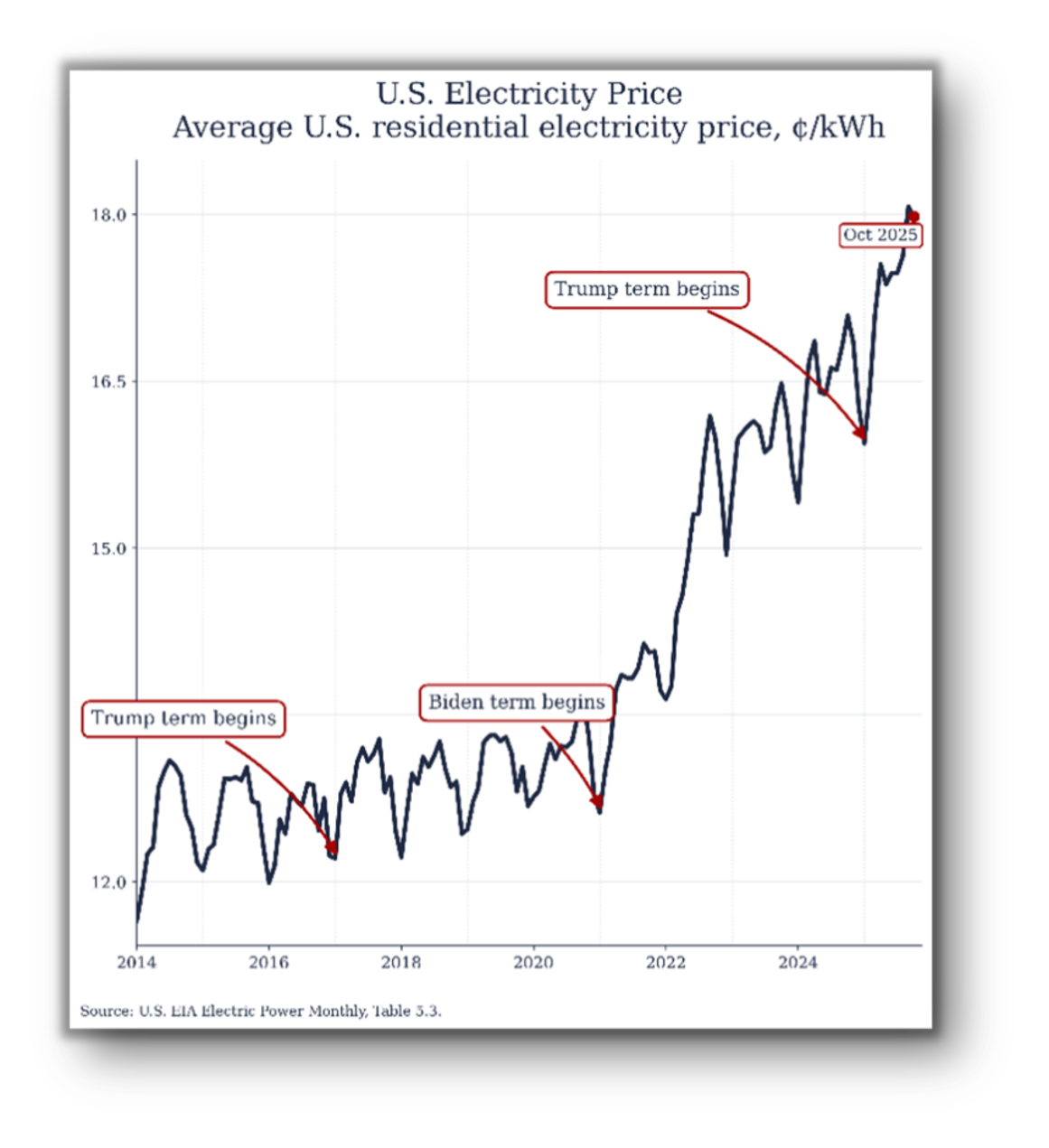
An earlier discussion in this paper also confirmed that retaining existing coal-fired EGUs for their full intended lifecycles is less expensive than replacing them with non-dispatchable sources (EVA, 2025).[3] However, electricity prices have increased over the past several years, driven largely by decarbonization and net-zero policies that force the early closure of fossil and nuclear generation and mandate their replacement with more expensive, weather-dependent wind and solar (Ellis & Vasquez, 2026; Hayes & Nash, 2024b). Numerous other studies also detail the dangers and costs associated with net-zero goals (Orr et al., 2026; Hayes et al., 2025; Hayes, 2025a; Orr & Rolling, 2025; Pyle et al., 2025; Antonini & Hayes, 2024).
“Energy industry experts, including utility executives, officials at the Federal Energy Regulatory Commission, and electric grid operators, warn that early closure of baseload plants will cause a net loss of generation capacity and leave the region at risk of shortages. Experts highlight the growing risks of attempting to replace them with unreliable and intermittent energy sources like wind and solar” (Hayes et al., 2025).
Figure 1 U.S. Electricity Price: Average U.S. Residential Electricity Price, ¢/kW
Source: Ellis & Vasquez, 2026
To recognize the need for more reliable and affordable power, and to address proposals such as constructing a new coal-fired plant in Alaska (Wade & Dlouhy, 2026), Congress could amend Section 111 of the CAA to clarify the legislation's original intent. That intent is perhaps best summarized by the “Dean of the House” and long-time Chair of the House Energy & Commerce Committee, Congressman John Dingell (D-MI). Congressman Dingell helped write the law and stated unequivocally that Congress did not intend to regulate greenhouse gas emissions when they passed this bill:
Like most members of this committee, I think the Supreme Court came up with a very much erroneous decision on whether the Clean Air Act covers greenhouse gases. Like many members of this committee, I was present when we wrote that legislation, and we thought it was clear enough that we didn't clarify it, thinking that even the Supreme Court was not stupid enough to make that finding. (Congressional Record, 2014)[4]
Restoring the Act’s original intent would reestablish much-needed legislative and regulatory certainty for power producers by reducing onerous compliance costs and allowing investments in new generation sources.
3. Bridge to new generation: Create a federal reliability safe harbor for at-risk coal and gas units.
There are several examples of coal plants around the nation, such as the J.H. Campbell Plant near Holland, MI, being rushed to closure, and activist pressure to phase out existing natural gas plants to meet “green” or “clean” energy mandates and net-zero goals. However, there is a broad and growing consensus among grid operators that the coupled impacts of rushed closures of baseload generation facilities and the push to replace them with weather-dependent, non-dispatchable sources[5]—wind and solar—are causing instability in electricity markets and rapidly rising prices (Antonini & Hayes, 2024). (Also see Figure 1 above.)
In repeated testimonies and publications, grid managers such as the North American Electric Reliability Corporation have warned that surging electricity demand, driven by electrification mandates, data center construction, and a growing economy, will collide with plans to shutter reliable baseload generation.
“Most new resources in development to come online in the next five years consist of battery storage and solar photovoltaic (PV), which are inverter-based and weather-dependent resources that increase the complexity of planning and operating a reliable grid. Meanwhile, more fossil-fired generator retirements loom in the next five years, reducing the amount of generation that has fuel on site and impacting the system’s ability to respond to spikes in demand” (NERC, 2026).
Keeping existing, reliable, baseload plants open until they can be replaced by a generation source that is as reliable (and affordable) as the source being closed will help to maintain existing cost structures and overall grid reliability.
Recommendation: Create a federal safe harbor to allow the continued operation of reliable, baseload plants that are needed for grid stability.
Immediate options include passing H.R. 3616, the Reliable Power Act, or H.R. 3632, the Power Plant Reliability Act of 2025.
To address these growing concerns about grid reliability and price increases, Congress could amend § 111 of the Clean Air Act and/or § 207 of the Federal Power Act to provide federal agencies with clear direction that reliable and affordable electrical service is, and rightly should be, the primary goal and function of grid managers. With this accomplished, the dangerous rush to close reliable baseload plants can be halted, and generation plants can be operated in a safe harbor until there is a clear plan to replace those plants with generation capacity that is at least as reliable and affordable, if not more so.
Despite growing concerns about grid reliability, utilities and elected officials continue to push misguided clean energy plans that force the premature closure of existing baseload plants. Missouri’s Rush Island coal plant was scheduled to retire 15 years early because upgrading the facility to meet strict EPA CAA compliance standards would have cost ratepayers over $1 billion (Frank, 2024). The J.H. Campbell Generating Plant in Michigan, the Comanche Plant, Unit 2, in Colorado, and the Brandon Shores plant in Maryland were similarly pressured to close well ahead of their originally scheduled closures due to litigation and the impacts of state-level clean energy mandates.
Talen Energy, the owner/operator of the Brandon Shores coal plant in Pasadena, Maryland, agreed to an early closure as part of a settlement with the Sierra Club. The utility even went so far as to publicly laud the closures of the Brandon Shores and H.A. Wagner coal generation facilities as part of the utility’s “transformational move toward a sustainable, ESG-focused future.”[6] Of course, in the same news release, the utility also admitted that the deal with the environmental group to rush the closures of existing coal plants provided protection from expensive and distracting litigation and permit disputes being waged by the same environmental groups and legislators (Talen Energy, 2020).
However, before the final closures were completed, Talen published a notice of an agreement with the regional grid operator, PJM Interconnection, L.L.C., “and a broad coalition of the Maryland Public Service Commission, Maryland customers, electric utilities, and Sierra Club,” indicating their plan to continue operating the two coal facilities until May 31, 2029. The utility clarified that “the agreement, colloquially called a ‘reliability-must-run’ or ‘RMR’ agreement, is intended to provide the power necessary to maintain grid and transmission reliability in and around the City of Baltimore until necessary transmission upgrades to provide reliable power to the area from other sources are complete” (Talen Energy, 2025).
Providing a federal safe harbor for the continued operation of at-risk coal and natural gas units would address tensions between rushed retirement schedules for baseload plants and the growing demand for electricity from data centers, electrification, and the administration's efforts to reshore manufacturing.[7]
Certain basic requirements could bind the safe harbor. It would apply to units facing an imminent risk of retirement due to compliance issues or costs associated with legislation such as the Clean Air Act. The safe harbor would also apply when the retirement (or derate) would violate NERC reliability standards, increase Loss of Load Expectations, or cause resource adequacy shortfalls as determined by regional transmission organizations. These shortfalls could be immediate or expected within a five-year window.
Once qualified for safe harbor status, the unit could have an initial term of five years, with extensions or redesignations by grid operators or state regulators allowed for additional five-year terms. Early termination of safe harbor status would be allowed if sufficient new, reliable, and dispatchable generation were brought online, and the unit was no longer required to maintain grid stability.
Addressing concerns that this represents an unusual or unwarranted intrusion into state matters, the Environmental Protection Agency’s 2024 NSPS for GHG Emissions from New, Modified, and Reconstructed Fossil Fuel-Fired EGUs rule (described previously in section #2) already included safety valves or short-term exemptions from its requirements, allowing generators to ignore emission limits to ensure grid reliability (Chemnick, 2024). These existing safety valves are a tacit admission by federal regulators that grid reliability is an immediate safety and economic issue that must take precedence. Creating a safe harbor for reliable, baseload generation is a logical next step to ensure grid reliability at all times.
4. Stop cost-shifting to households: Require data centers and hyperscalers to cover their costs.
Americans are wary of AI and data centers increasing their household electricity bills. Pew Research polling indicates that a significant portion of Americans have mixed feelings about data centers coming into their region. More Americans—25%—are comfortable that data centers are likely to create jobs, while only 15% are concerned that they will cost jobs. About 23% believe they will increase local tax revenues, while only 12% believe they will reduce them. However, more Americans—38%—believe that data centers will raise energy costs, while only 6% believe they will lower or have no impact on prices (Gramlich et al., 2026).
Socializing the costs of building or connecting new large loads, as has been the norm with the expansion of wind and solar development and the transmission infrastructure needed to connect them to the grid (Fisher, 2013; MISO, n.d.), forces competitors and ratepayers (consumers) to fund them. Rather than continue that practice, Congress could protect ratepayers by ensuring the company benefiting from the construction of the new large load, in this case, a data center, bears the cost of supplying power for it and connecting it to the electric grid.
Recommendation: Codify the intent of the Ratepayer Protection Pledge.
Immediate options for allowing physically islanded large loads[8] include passing S. 3585, the Decentralized Access to Technology Alternatives Act (The DATA Act) of 2026 (Cotton, 2026).
If a project only makes financial sense when others are forced to pay for it, it shouldn’t be built. Therefore, Congress could pass legislation to codify the intent of the Ratepayer Protection Pledge by amending the Federal Power Act to create and recognize a safe harbor for new grid-connected large loads that meet a three-point test.
- “Self-supply”: The new large load must fund or acquire sufficient generation resources to meet its own needs.
- “Pay your own way”: The new large load must bear the cost of constructing new generation and/or incremental upgrades to transmission/distribution networks.
- “No cost-shifting": Contracts and market agreements address the potential for changing financial situations to ensure costs are not shifted to other users.
Meeting this three-part test would require regulatory bodies, such as the Federal Energy Regulatory Commission (FERC), to presume that the proposed new load is reasonable and to ensure streamlined reviews.
Congress could create a similar safe harbor provision for physically islanded large loads that meet a three-part test.[9]
- “Physically islanded”: The load will be physically islanded (or disconnected) from the grid or bulk power supply.
- “Self-supply”: The load will fully meet its electric demand through on-site or contracted generation resources, so it does not rely on the bulk power system.
- “No cost-shifting": The new load will not impose incremental costs or reliability risks on ratepayers.
The safe harbor option provides a broadly palatable solution that addresses two major concerns associated with the potential for new large loads to affect reliability or pricing in electricity markets. First, it ensures that large new loads are either physically separated from the grid or fully paid for by the companies that would benefit from using them. This means that American families will not be asked to subsidize the power demands of large data centers or be forced to compete with them and accept limited electrical service due to growing demand from new large loads. Second, the safe harbor policy avoids the need for expansive, expensive bureaucratic oversight of companies as they meet their energy needs.
Companies that see an advantage in supplying their own electric demand can do so. Companies that choose to rely on the bulk power system for their electricity needs can pay to support the new generation, transmission, and distribution infrastructure required to supply them. Consumers are protected, and companies are free to choose the supply options that best meet their needs.
American households are not the only ones concerned about rising electricity prices. Data center businesses are also concerned about the costs associated with upgrading transmission infrastructure and bringing new power generation online. However, the One Big Beautiful Bill Act, also known as the Working Families Tax Cut (WFTC), extended key provisions of the 2017 Tax Cuts and Jobs Act (TCJA), which provide tax incentives to AI and data centers to help offset costs and encourage investment in new developments (H.R. 1, 2025).
The WFTC extended TCJA’s 100% Bonus Depreciation for qualified capital equipment, allowing full deductions in the year of purchase for any qualified materials. In fact, between 2018 and 2023, 25 of America’s largest businesses saved approximately $67 billion because of accelerated depreciation. Of these 25 organizations, several (Amazon, Meta, Intel, Google, to name a few) are actively investing in AI and data center growth and will stand to benefit from WFTC tax benefits (Wamhoff et al., 2023).
5. Add reliable capacity fast: Fast-track firm generation, especially at brownfield sites.
New electricity power plants face several obstacles, including lengthy and costly environmental reviews (and litigation), infrastructure costs, and interconnection queue bottlenecks. Some of those obstacles are related to the potential impacts of industrial activities on previously undeveloped areas. However, building new firm, or dispatchable, generation facilities on brownfield sites[10] could mitigate many permitting concerns and ensure that existing transmission and distribution infrastructure could be used (or repurposed), reducing the potential costs or environmental impacts of bringing new facilities online.
Recommendation: Create a federal fast lane to permit new or upgraded dispatchable generation facilities proposed on existing brownfield sites.
Immediate options for protecting grid reliability include passing H.R. 1047, “Guaranteeing Reliability through the Interconnection of Dispatchable (GRID) Power Act”.[11]
To help accelerate the development of reliable electricity generation, Congress could create a federal fast lane for interconnecting new, uprated, or repowered dispatchable generation facilities, especially those proposed for development on existing brownfield sites or sites that meet certain criteria, such as financial security bonds.
Programs already exist to turn “brownfields into brightfields,” such as the EPA’s RE-Powering America’s Land Initiative. However, these programs prioritize non-dispatchable, weather-dependent resources (U.S. EPA, n.d.). While they do allow some geothermal and biomass, they do not primarily focus on readily scalable, dispatchable resources, such as natural gas, coal, or nuclear, which firm up the grid and provide reliable, affordable electricity.
There is ample precedent for repurposing brownfields as locations for reliable generation facilities.
- The Alamitos Energy Center in California is a 1,040 MW combined-cycle natural gas plant built on the site of the former Alamitos Generating Station brownfield (CEC, n.d.).
- Pennsylvania’s CPV Fairview Energy Center was a brownfield salvage yard and is now a 1,050 MW natural gas combined-cycle plant. Notably, this brownfield redevelopment included the remediation of the site, which involved “the hauling and removal of 178,355 tons of buried debris, 10 underground storage tanks, and .63 miles of underground piping” (CPV, n.d.).
- Mississippi’s Morrow Repower Project includes a 572 MW advanced-class combustion turbine on a former coal plant brownfield (Patel, 2024).
Multiple other initiatives exist, including in regional markets—overseen by Regional Transmission Organizations (RTOs) and Independent System Operators (ISOs).
- The California ISO (CAISO) is targeting projects with “50 MW or more of available deliverability,” while PJM is implementing a “Reliability Resource Initiative” that will target “reliability-focused expansion” and is expected to “add 50 new projects” to a fast-track process (Patria & Colwell, 2025).
- The Midcontinent Independent System Operator (MISO) and the Southwest Power Pool (SPP) have FERC-approved “Expedited Resource Addition/Adequacy Study” processes, which expedite decisions on projects described as “shovel-ready” and that meet specific criteria, such as “higher milestone payments and financial security deposits.” In January 2026, MISO and SPP had “about 51.6 GW of planned projects” in the fast-track process (Howland, 2026).
- Ohio’s H.B. 15 (2025) came into effect in August 2025. This bill provides a technology-neutral framework that explicitly targets the reuse of existing infrastructure and allows the Ohio Department of Development to designate brownfield sites or former coal mines as “Priority Investment Areas” (PIAs). Projects proposed in these areas can receive a 5-year property tax exemption and accelerated review by the state Power Siting Board, with a review period as short as 45 days, compared with 5 months for a normal review.
Rep. Troy Balderson’s (R-OH) H.R. 1047 (2025), GRID Power Act,” seeks to prioritize reliability while not abandoning the need to develop or improve the existing interconnection process to ensure any permitted generation assets can connect to the grid quickly. While not focused on brownfield sites, this legislation would address an immediate-term issue in the interconnection process by giving FERC the authority to allow limited prioritization of dispatchable generation. The bill is an example of legislative effort to help achieve the goal of developing dispatchable, reliable generation. The GRID Power Act passed the House in September 2025, but at the time of publication, it has not progressed beyond the Senate Committee on Energy and Natural Resources.
6. Speed up nuclear development and deployment: Codify hard deadlines for new reactor licenses, uprates, and restarts with automatic approvals.
Since the main agency in charge of U.S. nuclear generation moved from the Atomic Energy Commission (AEC) to the Nuclear Regulatory Commission (NRC) in 1975, the number of new nuclear reactors that were approved and built dropped dramatically, from dozens under the AEC to a mere handful under the NRC (Holt, 2025). The AEC existed to both regulate and promote civilian nuclear power, whereas the NRC has focused solely on regulation. Despite its noteworthy safety record—nuclear power is one of the safest forms of energy generation in use today (Ritchie, 2020)—nuclear power has suffered from overblown environmental permitting and frivolous litigation.
Recommendation: Codify Section 5(a) of Executive Order 14300 to speed permitting of new nuclear sources.
Congress could codify Section 5(a) of Executive Order 14300, ensuring that the fees are tied to the Nuclear Energy Innovation and Modernization Act (NEIMA) deadlines “rather than the nonbinding ‘generic milestone schedules’ guidelines the NRC has already adopted.” This applies fixed deadlines to the NRC’s evaluation and approval of various licensing procedures. The EO takes strong action to advance efficient permitting, but if it were codified into law, industry would have assurance that these changes would not be easily reversed.
Efforts like the Nuclear Energy Innovation and Modernization Act of 2019 (NEIMA) showed promise but proved too lenient in the milestones and guidelines set for the NRC’s reviews. However, further progress was made with the bipartisan ADVANCE Act of 2024 and the Trump administration’s Executive Order 14300.
Under the direction of EO 14300, and beginning in May 2025, the NRC has begun phasing in 12- to 18-month “NEIMA milestone schedules” (U.S. NRC, 2025) that are now described as being completed “ahead of schedule and under budget.” Under the changes brought in by the ADVANCE Act, similar 18-month timelines are required for microreactor licensing, and the NRC is now tracking “deliverables for 36 milestones on a public dashboard” (NIA, 2025).
Fundamental changes to the NRC’s structure could still be beneficial for deploying clean, reliable nuclear generation facilities, as the agency’s funding still comes from regulatory fees paid by those it regulates rather than from Congressional appropriations. According to the Bipartisan Policy Center, “This structure places a cost of regulatory licensing and oversight on applicants and creates a disincentive for the NRC to accelerate its licensing review process” (Jacobs et al., 2024).
Before the ADVANCE Act, combined licenses required an average of 90,000 staff hours and $5 million in contractor costs (U.S. NRC, 2023). One example of the high costs, extended timelines, and extreme effort required to receive a permit to begin construction of the Fermi 3 reactor in Michigan illustrates the regulatory holdup. “[G]etting approval to build the Fermi 3 plant in southeast Michigan took almost 7 years and cost the utility [DTE] $100 million. They applied to the NRC for the Fermi 3 permit in 2008 and received approval in 2015” (Hayes & Nash, 2024b).
The growth of nuclear generation in this country has been bottlenecked at the NRC for decades. The most recent additions to the nuclear fleet, Vogtle Units 3 and 4 in Georgia, are also relevant examples, taking about seven years longer and costing over $16 billion more than expected (Johnson, 2024) The NEIMA deadlines could be shortened; a 2023 report from the Idaho National Laboratory explains how “opportunities exist to substantially shorten [new reactor generic milestone schedule] timeframes, perhaps by half” and how “the NRC should be required to revisit the milestones annually to look for improvements” (Burdick et al., 2023).
Keeping Gasoline and Natural Gas Costs Low
7. Let natural gas flow: Impose a 180-day deadline on Federal Energy Regulatory Commission (FERC) decisions for interstate pipelines.
Beneficial products and infrastructure, such as interstate pipelines, should not be subjected to endless, sequential, and compounded regulatory process delays, given that natural gas is one of the cleanest, most efficient energy sources in the U.S. energy mix (Hayes & Nash, 2024a). If there are concerns about potential environmental impacts or reasonable questions regarding the need for new pipeline projects, regulators may address them in a prompt response to the proposed permits, allowing the proponent to respond to the regulators’ stated concerns within a realistic timeframe.
Recommendation: Congress could pass legislation establishing a 180-day timeline for final approval or rejection of proposed interstate pipeline projects.
The Jordan Cove LNG + Pacific Connector Pipeline provides an illustrative example of how endless regulatory processes can impede the development of essential energy infrastructure. In 2013, Jordan Cove Energy filed the initial project application to develop an LNG export terminal and associated infrastructure. Pacific Connector Gas Pipeline also filed an application in 2013 to build an interstate natural gas pipeline to supply the Jordan Cove LNG Terminal (FERC, 2020a). FERC reporting indicates that, over the following two years, regulators made four additional data requests for evidence. In 2016, the third year of the review process, the project was denied by FERC on the grounds of a claimed lack of “market need.” Following the rejection, developers renegotiated contracts and refiled the application in 2017. After a further 2.5-year review process that included further FERC delays in completing the environmental impact statement, the project was finally approved in 2020 (FERC, 2020a; Journal of Petroleum Technology, 2019).
Similar multi-year application processes highlight the extended timelines required to receive approvals for essential infrastructure.
- The Alaska LNG Project, which took 3 years to receive FERC approval (FERC, 2020b).
- The Constitution Pipeline project, which was denied a permit after a heavily front-loaded federal permitting process took approximately 18 months and required a full environmental impact statement and sequential permit applications. The federal process delayed state permitting, ultimately leading to the project’s failure (Passut, 2016).
- The Northern Access Pipeline, which took three years to receive FERC approval. That delayed approval process added to financing issues, and the project was eventually abandoned after an additional seven years of holdups at the state level (Merkel, 2017).
Despite delays in approvals for these infrastructure projects, forecasts indicate that domestic natural gas consumption will continue to grow beyond 2030 and stabilize through 2050 (U.S. EIA, n.d.-b). The IEA’s World Energy Outlook 2025, Stated Policies Scenario (STEPS), predicts that even with accommodations for growth of wind and solar, electrification, and increased efficiency, natural gas demand increases by 1% annually through the early 2030s. The STEPS scenario projects demand growth to 4,800 billion cubic meters (bcm), or 169,440 billion cubic feet (bcf), by 2035, followed by a slight decline after 2050.
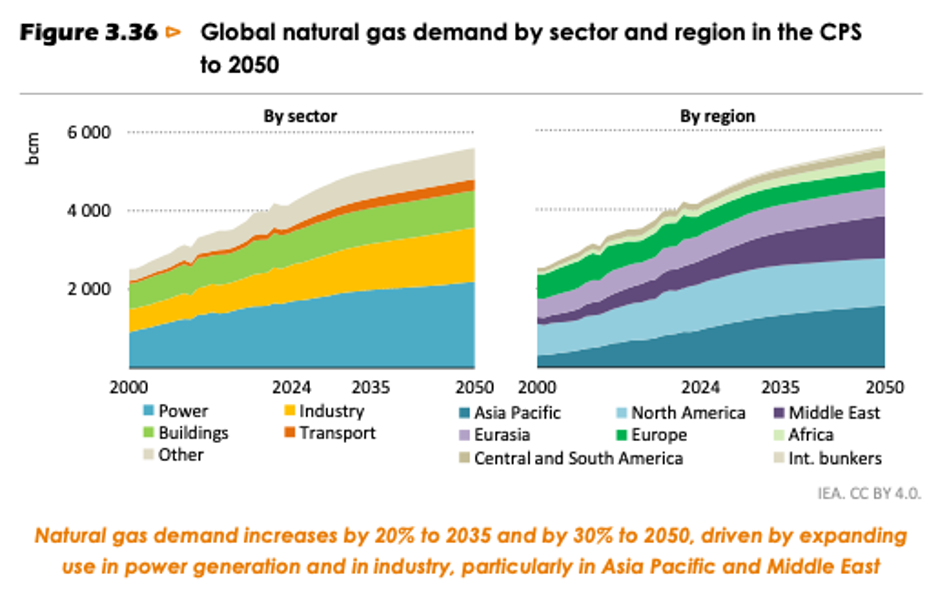
In contrast, the IEA Current Policies Scenario (CPS) predicts strong increases in global LNG demand through 2050, driven by higher demand in Asia and the Middle East, as well as growing demand to fuel electricity generation and AI/data center needs. The CPS scenario projects growth to 5,600 bcm, or 197,762 bcf, by 2050, 30% above 2024 levels (IEA, 2025).
Figure 2. Global Natural Gas Demand by Sector and Region in the IEA Current Policy Scenario to 2050
Source: IEA, 2025
As the world’s largest producer of crude oil and natural gas, the United States is the logical choice to supply a significant share of the growing demand (Hayes, 2025b). Building on Secretary Wright’s orders to “Unleash [a] Golden Era of American Energy Dominance,” the need to “streamline permitting and identify undue burdens on American energy” provides an excellent area of focus for Congressional attention (Wright, 2025). Congressional action to reduce or eliminate a near-endless string of regulatory delays by implementing a 180-day shot clock for FERC decisions on interstate pipelines could help address delays developers face and the added costs of navigating the regulatory maze.
8. Prevent state overreach on interstate energy infrastructure: Codify limits on Clean Water Act Section 401 permits.
While they were once considered an almost automatic administrative process and a final check to ensure the quality of Waters of the United States was protected, Clean Water Act § 401 water quality permits have quickly morphed into a tool for some states to habitually block the construction of essential energy infrastructure (notably interstate pipelines).
For example, the New York State Department of Environmental Conservation has used the CWA § 401 certification process to block pipeline construction, most recently the Constitution Pipeline. The state’s plan to block new pipelines grew out of a 2016 decision by former New York Governor Andrew Cuomo that his state would, “as a matter of broad state policy and not necessarily any project-specific analysis,” cease approving any Section 401 permit for proposed fossil fuel pipelines (Markind, 2026). However, states that impose these broad policies to disallow pipeline construction have effectively usurped FERC's role, which has jurisdiction over the siting of interstate pipelines. Their actions unfairly limit other states’ ability to access critical energy supplies.
Recommendation: Congress could codify limits to, and clarify the intent of, Clean Water Act § 401 certifications to ensure they address water quality impacts only and cannot be used as de facto bans on fossil fuel use and development.
Immediate options include codifying the rule proposed by the EPA on January 13, 2026 (U.S. EPA, 2026f).
The Environmental Protection Agency has proposed a rule that would eliminate regulatory overreach by states and limit the use of CWA § 401 to protect water quality. Congress could cement this action to streamline permit approvals and restore the Act's intent by stopping the weaponization of the permitting process.
The CWA limits the ability of a federal agency to permit any activity that results in a discharge into the Waters of the United States without a § 401 certification or waiver. However, changes to the rule in 2023 expanded its scope beyond addressing the potential impacts of point-source pollution and encouraged states and tribes to employ delay tactics that stalled or limited pipeline permitting. New York’s broad refusal to permit any fossil fuel infrastructure projects provides an excellent example of how the rule created “substantial regulatory burdens that unnecessarily delayed or blocked vital energy, infrastructure, and development projects critical to America's economic and national security” (U.S. EPA, 2026g). Congress could address the improper expansion of the § 401 process by codifying the changes in the proposed January 2026 EPA rule.
9. Remove federal cost burdens on household energy: Fully repeal the federal methane fee.
The federal methane fee, or the Waste Emissions Charge (WEC) was created as part of the 2022 Inflation Reduction Act and the Biden Administration’s climate change mitigation policies. The fee was put in place to penalize methane emissions by large oil and gas producers. The fee began at $900 per metric ton and rose to $1,500 after two years (Ramseur, 2022). The fee was intended to incentivize companies to capture methane emissions and modify their processes to reduce methane emissions. However, rather than offering any real environmental protection, this regulation promised higher prices as it overlapped with other existing regulations. Estimates forecast annual costs ranging from $39 billion to $66 billion, while addressing only 2.6% of the nation’s total reported greenhouse gas emissions (Czapla, 2021).
Recommendation: Fully repeal the federal methane fee.
Congress could repeal the WEC/federal methane fee and related compliance burdens that raise the costs of producing natural gas, arguably the nation’s most valuable energy source (U.S. EIA, n.d.-a; Hayes & Nash, 2024a).
The core statutory authority for the WEC/federal methane fee was added in the Inflation Reduction Act of 2022 under Section 136 of the Clean Air Act and has not been repealed by statute. H.J. Res. 35 (2025), passed by the 119th Congress, voided the EPA rule that implemented the charge and prohibited the EPA from issuing a rule with the same effect without congressional approval. In addition, the One Big Beautiful Bill Act (H.R. 1, 2025) postpones the WEC's collection until 2034. However, the statutory requirement for the methane WEC remains in place and could be reinstated with a new agency rulemaking. Amending CAA Section 136 to remove it is the logical and appropriate course of action.
10. Lower fuel transport costs: Reform the Jones Act to reduce costs for shipping oil and refined products.
In January, prior to the conflict in the Middle East, gasoline prices were at their lowest levels in five years (Ellis & Vasquez, 2026), validating energy dominance policies. Policymakers could continue to ensure Americans enjoy lower gasoline prices by building on the Trump Administration’s temporary waivers of the Jones Act—officially, the Merchant Marine Act of 1920 (46 U.S.C. 55102)—and reforming this law to remove unnecessary restrictions on the movement of fuels.
This legislation requires that cargo shipped between American ports be transported on U.S.-built, U.S.-flagged, and U.S.-crewed ships. However, only a limited number of Jones Act-compliant ships capable of carrying 1,000 gross tons exist to move energy supplies to and from U.S. ports. Department of Transportation figures indicate that only 56 (or 63 “militarily-useful”) Jones Act-compliant tankers exist, compared to a global fleet of nearly 7,500 (Grabow, 2026; U.S. DOT, 2025).
Balsa Research reports that only one additional Jones Act-compliant LNG tanker exists to move LNG from Texas to Puerto Rico’s EcoEléctrica generation facility. They also note that this French-built ship operates under provisions allowing foreign-built ships that entered service before 1996, and that the U.S. has not built an LNG tanker since 1980 (Balsa Research, 2025).
Additionally, reports from the White House indicate that the initial waivers of the Jones Act to allow increased energy movement during the actions in Iran have resulted in more than 40 additional tankers and over 9 million barrels of domestically produced oil being delivered to American ports (Cerullo, 2026).
Recommendation: Authorize targeted energy security waivers to the Jones Act or repeal Jones Act restrictions on energy movement.
Immediate options to reduce the impacts of the Jones Act on the free flow of domestic energy products within the United States could include passing S. 4090, the Protecting Access to American Products Act of 2026 (Lee, 2026).
Congress could repeal any Jones Act restrictions on energy movement or authorize targeted energy security waivers for domestic fuel movements, especially to constrained regions during peak-risk periods. Federal shipping policies should not compound regional fuel scarcity, and making this change “will ensure that communities with insufficient energy distribution networks can access American energy resources, regardless of a vessel’s flag” (AFPI, 2022).
Recent research published by the National Bureau of Economic Research indicates that Jones Act-based limitations on energy flows have significantly increased energy prices. The paper explains that while the U.S. Gulf Coast produces and exports fuels “to destinations as far away as Asia,” the U.S. East Coast imports the same fuels from “across the Atlantic.” This situation exists because “Jones-compliant movements from the USGC to USEC are estimated to cost as much as three times as much as movements on foreign-flag vessels” (Kellogg & Sweeney, 2023).
America First Policy Institute has already described the challenges that restricting energy flows poses for energy prices and availability. The America First Agenda explains how: “State and local geographies and policies also affect energy access and affordability and can amplify challenges, including permitting issues, market distortions, and problems with energy access. For example, regions, states, and territories with little to no interconnections are exposed to above-average electricity prices and energy supply disruption, particularly during natural disasters or supply shortages.
The Jones Act is one policy that has repeatedly inflamed energy insecurity in these regions. By constraining maritime interstate commerce to American-built, owned, and operated vessels, many of these regions are forced to look to foreign, often costlier, suppliers due to a stark lack of availability of Jones Act-compliant vessels” (AFPI, 2022).
The recent moves by the Trump Administration to allow 60-day waivers of Jones Act requirements and the subsequent 90-day extension (Cerullo, 2026) for oil, natural gas, fertilizer, and coal are strong tools for reducing costs (Leavitt, 2026; Wise, 2026; Grabow, 2022). Sen. Lee’s “Protecting Access to American Products Act” would also allow an “expedited waiver process for American manufacturers for whom no Jones Act-compliant shipping carriers exist” and would help to reduce the costs of the essential energy supplies that Americans need (Office of Senator Mike Lee, 2026).
Conclusion
Policymakers have an opportunity to address the needs of American citizens. For years, many federal policies have focused on expanding the regulatory state, mandating and subsidizing the use of so-called green energy sources, while rushing to close existing baseload sources and restrict the development of new, reliable energy sources. The result of those policies has been limited or nonexistent environmental benefits, paid for by rapid price increases and compounded by mounting instability in energy supplies.
However, by implementing the ten actions proposed in this paper—among them, maintaining existing, reliable coal and natural gas generation facilities; clarifying the intent of key legislation like the Clean Air Act; repealing unnecessary and burdensome regulations like the 2024 MATS rule; creating safe federal safe harbors to protect existing baseload generation plants that are needed for grid stability; accelerating nuclear development/deployment; and reforming the Jones Act to allow the free movement of energy supplies—Congress could push back against unnecessary and burdensome rules that stymie American energy dominance and discourage investment. Prioritizing proven, dispatchable, and reliable domestic energy sources will help to lower prices and expand supplies, while reducing our reliance on strategic competitors for energy solutions.
We opened with the recognition that energy powers life, while affordable, reliable energy powers prosperity. Implementing the ten proposals in this paper would help to reverse damaging and expensive energy policies, ensure more stable pricing, and bolster energy reliability. Implementing these ten policies would help the nation move toward energy prosperity.
American energy dominance can meet our domestic energy needs and provide our friends and allies with reliable energy supplies from a trusted source. Policymakers should move quickly to implement this ten-point energy policy framework to deliver lower energy prices and prosperity to American families and businesses.
[1] Note that this Energy Ventures Analysis finds existing coal plants to be the least expensive option, even though it bases cost estimates on Lazard’s 2025 LCOE+ metric, which attempts to address the problems of weighting the cost of baseload vs. intermit resources. The LCOE+ metric uses ELCC and CONE values by region to address the costs of adding firming to weather-dependent sources. However, as Lazard admits, even the LCOE+ metric still fails to fully address the issues associated with providing accurate cost comparisons as it does not include costs for overbuilding and curtailment, the costs of transmission (construction/upgrades), full subsidies, etc. (Lazard, 2025).
[2] The final rule is effective as of April 27, 2026.
[3] Note that this Energy Ventures Analysis finds existing coal plants to be the least expensive option, even though it bases cost estimates on Lazard’s 2025 LCOE+ metric, which attempts to address the problems of weighting the cost of baseload vs. intermit resources. The LCOE+ metric uses ELCC and CONE values by region to address the costs of adding firming to weather-dependent sources. However, as Lazard admits, even the LCOE+ metric still fails to fully address the issues associated with providing accurate cost comparisons as it does not include costs for overbuilding and curtailment, the costs of transmission (construction/upgrades), full subsidies, etc. (Lazard, 2025).
[4] This quote is part of a February 4, 2014, statement to the Congressional Record by Senator Jim Inhofe while discussing the Agricultural Act of 2014. Sen. Inhofe quoted Congressman Dingell in his statement.
[5] “Dispatchable” refers to energy sources that can be turned on or off, or ramped up or down, based on energy demand. An example of a dispatchable source would be natural gas, which can increase or decrease its output, based on immediate demand. An example of a non-dispatchable source is wind and solar, which can only produce electricity when the weather cooperates.
[6] “ESG” refers to Environment, Social, and Governance, which is a business or investment framework that is used by some businesses to evaluate business practices. ESG has been widely criticized as driving woke or progressive values over fiduciary responsibility.
[7] Cornell Law School explains that a federal safe harbor “refers to a provision that provides protection from liability or penalties under specific situations or conditions. A safe harbor provision may be included in statutes or regulations to give peace of mind to good-faith actors who might otherwise violate the law on technicalities beyond their reasonable control” (Cornell Law School, n.d.).
[8] “Physically islanded large loads” refers to a process by which new large loads (demands on electricity supply) are not connected to (or are fully disconnected from) the bulk power system, or electric grid. Doing this ensures they do not rely on the electric grid, which also provides utility services to the broad population, to meet their electricity demands.
[9] See work like “The Case for Consumer-Regulated Electricity” (Fisher & Lyons, 2026), which describes how privately built electricity networks can allow developers of large electric load facilities to supply their own electricity demand without pushing the costs onto ratepayers.
[10] ”Brownfield sites” are typically industrial or commercial sites, such as factories or generation facilities, currently in use or previously developed that could be re-used or re-developed and used as the location for a new generation facility.
[11] Note that the GRID Power Act focuses on the rapid connection of dispatchable generation. It does not specify that generation capacity’s location, such as brownfield sites.
Resources